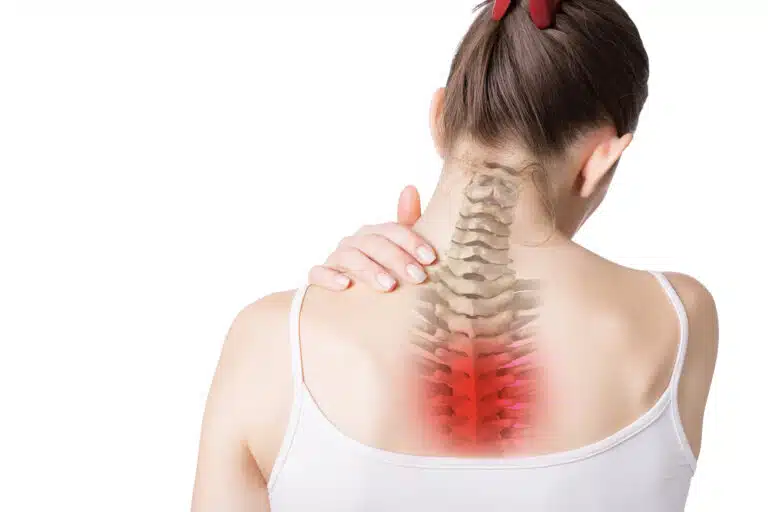

Have you ever noticed your lower back beginning to ache after standing in the kitchen, waiting in a long line, or spending several hours on your feet at work? Maybe the discomfort starts as a dull ache and gradually becomes more noticeable until you feel the need to sit down or lean against something for support. If your lower back hurts when you stand too long, you’re not alone. Standing-related back pain is a common complaint that can affect everything from daily chores to work responsibilities and recreational activities.
While standing is a normal part of everyday movement, remaining in one position for an extended period can place sustained demands on the muscles, joints, and other structures supporting your spine. In some cases, discomfort develops because of muscle fatigue or limited movement throughout the day. In others, persistent pain may be associated with conditions such as lumbar spinal stenosis, degenerative changes, or irritation of the joints in the lower back.
At Spine Correction Center, we understand how frustrating it can be when something as simple as standing becomes uncomfortable. Understanding the common causes of standing-related lower back pain, along with strategies for improving comfort and recognizing when professional evaluation is necessary, can help you take steps toward better spinal health.
Why Does Standing for Long Periods Cause Lower Back Pain?
Your lower back, also called the lumbar spine, supports much of your upper body’s weight and helps you maintain balance during everyday activities.
The lumbar spine consists of five vertebrae supported by intervertebral discs, ligaments, muscles, and joints.
When you stand, these structures work together to keep your body upright.
Although standing is a natural activity, maintaining a relatively stationary position for extended periods can increase muscle fatigue and contribute to discomfort.
Some people may also experience pain because certain spinal structures are sensitive to sustained loading or specific positions.
Common contributors to lower back pain while standing include:
-
Muscle fatigue or reduced muscular endurance.
-
Prolonged standing without movement breaks.
-
Lumbar spinal stenosis.
-
Irritation of the facet joints.
-
Age-related changes in the spine.
-
Certain disc-related conditions.
-
Hip mobility limitations.
-
Previous back injuries.
The cause can vary depending on your age, medical history, activity level, and specific symptoms.
1. Muscle Fatigue From Prolonged Standing
One of the most common explanations for lower back discomfort during prolonged standing is muscle fatigue.
Your back and abdominal muscles help stabilize your trunk while you’re upright.
When you remain standing for long periods, these muscles must continue working to support your position.
If you’re not accustomed to standing for extended periods, or if your muscles have limited endurance, you may begin to experience aching or tightness.
Signs of Muscle-Related Back Pain
You may notice:
-
A dull ache across the lower back.
-
Tightness that gradually develops while standing.
-
Discomfort that improves after changing positions.
-
Muscle tenderness.
-
Pain after long work shifts or household activities.
Muscle-related discomfort often improves with movement, rest, or changes in activity.
However, recurring symptoms may benefit from an evaluation to identify contributing factors and appropriate strengthening exercises.
2. Lumbar Spinal Stenosis
Lumbar spinal stenosis is a condition in which the spaces within the lower spine become narrowed.
This narrowing can place pressure on nerves traveling through the spinal canal.
Spinal stenosis becomes more common with age and may develop alongside degenerative changes in the spine.
One characteristic symptom pattern is discomfort that becomes worse while standing upright or walking and improves when sitting or bending forward.
This pattern is sometimes called neurogenic claudication.
Common Symptoms of Lumbar Spinal Stenosis
Symptoms may include:
-
Lower back discomfort while standing.
-
Pain or heaviness in the buttocks or legs.
-
Tingling or numbness in the legs.
-
Symptoms that worsen during prolonged walking.
-
Relief when sitting or leaning forward.
-
Reduced tolerance for standing upright.
Not everyone with spinal stenosis experiences symptoms, and back pain alone doesn’t confirm the condition.
If your discomfort consistently improves when you lean forward or sit down, a healthcare professional can evaluate whether spinal stenosis or another condition may be contributing.
3. Facet Joint Irritation
The facet joints are small joints located along the back of the spine.
They help guide movement and provide stability between vertebrae.
Like other joints, facet joints can develop age-related changes or become irritated.
Certain positions, particularly those involving lumbar extension or leaning backward, may increase discomfort in some individuals.
What Does Facet-Related Back Pain Feel Like?
Possible symptoms include:
-
Aching in the lower back.
-
Discomfort when standing upright for extended periods.
-
Pain when leaning backward.
-
Stiffness after inactivity.
-
Discomfort that sometimes extends into the buttocks.
However, these symptoms aren’t unique to facet joint problems.
A physical examination and medical history are important for determining the most likely source of pain.
4. Limited Movement Throughout the Day
Your spine is designed to move in different directions throughout the day.
When you remain in one position for an extended period, whether sitting or standing, certain muscles and joints may become uncomfortable.
This is especially common in jobs that require long periods of stationary standing.
Examples include:
-
Retail employees.
-
Teachers.
-
Healthcare professionals.
-
Restaurant workers.
-
Warehouse employees.
-
Hair stylists.
-
Manufacturing workers.
Although prolonged sitting is often discussed as a contributor to back discomfort, standing in one place for hours can also be challenging.
The solution isn’t necessarily to sit more throughout the day.
Instead, regularly changing positions and incorporating comfortable movement may help reduce sustained physical demands.
5. Age-Related Changes in the Lumbar Spine
As you get older, the structures within your spine naturally undergo changes.
Intervertebral discs may gradually lose some water content, and spinal joints can develop degenerative changes.
These changes may be described as lumbar spondylosis or degenerative disc disease.
Although these findings are common with aging, they don’t always cause pain.
Many people have degenerative changes visible on imaging without experiencing significant symptoms.
When symptoms are present, some individuals notice discomfort during prolonged standing, walking, or other activities.
Treatment generally focuses on improving function, managing symptoms, and maintaining physical activity rather than attempting to reverse normal age-related changes.
6. Disc-Related Lower Back Pain
The intervertebral discs act as cushions between the vertebrae.
They help distribute forces and allow the spine to move.
Disc-related conditions, including disc degeneration or herniation, can sometimes contribute to lower back pain.
However, disc problems don’t always produce the same symptom pattern.
Some people experience more discomfort when sitting or bending forward, while others notice symptoms during standing or walking.
If a disc condition irritates a nearby nerve, additional symptoms may develop.
These can include:
-
Pain traveling into the buttock or leg.
-
Tingling or numbness.
-
Burning or electric-like sensations.
-
Muscle weakness.
Because many conditions can cause similar symptoms, a professional evaluation is important for identifying the underlying cause.
7. Hip Mobility and Muscle Endurance
Your hips, pelvis, and lower back work together during standing and walking.
If certain muscles have reduced endurance or your hips have limited mobility, you may compensate by changing how you stand or move.
For some individuals, these movement patterns can contribute to discomfort.
Muscles involved in supporting the lower back and pelvis include:
-
Abdominal muscles.
-
Gluteal muscles.
-
Hip flexors.
-
Back extensor muscles.
-
Deep trunk stabilizers.
A balanced strengthening and mobility program may help improve standing tolerance.
However, no single muscle imbalance or posture pattern explains every case of lower back pain.
An individualized assessment can help identify which exercises are most appropriate.
8. Previous Back Injuries
A previous lower back injury may contribute to recurring discomfort during certain activities.
For example, someone who has experienced a muscle strain or other lumbar injury may notice symptoms when returning to prolonged standing.
In some cases, reduced activity during recovery can lead to decreased muscular endurance.
Other individuals may develop persistent pain involving several physical and nervous system factors.
If you’ve experienced recurring back pain since an injury, a healthcare professional can assess your current symptoms and help develop a safe plan for improving activity tolerance.
Why Does My Lower Back Hurt When I Stand but Feel Better When I Sit?
If your back pain consistently worsens during standing and improves when you sit down, the pattern may provide useful information about the cause.
Sitting changes the position of your pelvis and lumbar spine.
For some people, this reduces the demands placed on certain muscles and joints.
In individuals with lumbar spinal stenosis, bending forward or sitting can increase available space around affected nerves and reduce symptoms.
However, relief with sitting doesn’t automatically mean you have spinal stenosis.
Muscle fatigue, joint irritation, and other conditions may produce similar patterns.
If you experience this regularly, especially when accompanied by leg discomfort, numbness, or weakness, a medical evaluation is recommended.
Why Does My Lower Back Hurt After Standing for Just a Few Minutes?
Some people develop discomfort after several hours of standing, while others notice symptoms within only a few minutes.
A reduced tolerance for standing may be associated with:
-
Significant muscle sensitivity.
-
Limited activity tolerance.
-
Spinal stenosis.
-
Certain joint-related conditions.
-
Recent injury.
-
Persistent or chronic lower back pain.
The amount of time you can stand comfortably doesn’t necessarily indicate how serious a condition is.
However, pain that begins quickly, becomes progressively worse, or interferes with normal daily activities deserves evaluation.
Can Standing on Hard Floors Cause Back Pain?
Standing on hard surfaces for extended periods may contribute to discomfort in some individuals.
Hard flooring provides limited cushioning, and prolonged stationary standing can increase fatigue in the feet and lower extremities.
This may influence overall comfort during long work shifts.
Supportive footwear, appropriate floor mats, and regular movement breaks may help some people tolerate standing more comfortably.
However, evidence for specific shoe inserts or anti-fatigue mats as treatments for lower back pain is limited.
They may be useful comfort measures, but they shouldn’t replace evaluation for persistent symptoms.
Does Poor Posture Cause Back Pain When Standing?
Posture can influence how physical demands are distributed across muscles and joints.
However, there isn’t one perfect standing posture that prevents lower back pain for everyone.
Some individuals may feel uncomfortable when standing with their lower back excessively arched, while others may find that rigidly holding themselves upright increases muscle tension.
Rather than trying to maintain a perfectly straight posture throughout the day, focus on standing comfortably and changing positions regularly.
Small adjustments, such as shifting your weight or placing one foot on a low footrest for short periods, may help reduce discomfort.
The most useful standing position is often one that allows you to remain comfortable and move naturally.
How Can You Relieve Lower Back Pain From Standing?
If your symptoms are mild and don’t involve concerning neurological signs, several self-care strategies may help.
1. Change Positions Frequently
Avoid remaining completely stationary for long periods.
Try taking short walking breaks, shifting your weight, or alternating between standing and sitting when possible.
2. Use a Footrest
Placing one foot on a low, stable footrest for a short period may help some people feel more comfortable.
Alternate feet regularly.
3. Wear Comfortable, Supportive Shoes
Choose footwear that feels comfortable during prolonged standing.
Avoid assuming that one particular shoe style will work for everyone.
4. Incorporate Gentle Movement
Walking, gentle stretching, and comfortable movement may help reduce stiffness and muscle fatigue.
5. Build Muscular Endurance
Strengthening the muscles that support your trunk and hips may help improve your ability to tolerate standing.
A physical therapist or other qualified healthcare professional can recommend an appropriate exercise program.
6. Use Heat for Temporary Relief
A warm compress or heating pad may help ease muscle tension.
Avoid excessive heat and follow safe use instructions.
7. Gradually Increase Standing Tolerance
If you’ve been relatively inactive, gradually increasing the amount of time you spend standing and walking may help improve endurance.
Avoid forcing yourself through severe or progressively worsening pain.
Exercises That May Help With Standing-Related Lower Back Pain
Exercise is an important part of managing many types of uncomplicated lower back pain.
The most appropriate exercises depend on your symptoms and underlying condition.
The following movements may be comfortable for some individuals.
Pelvic Tilts
Lie on your back with your knees bent and feet resting on the floor.
Gently tighten your abdominal muscles and tilt your pelvis to flatten your lower back slightly toward the floor.
Hold briefly, then relax.
Glute Bridges
Lie on your back with your knees bent.
Gently engage your abdominal and gluteal muscles and lift your hips a comfortable distance from the floor.
Lower slowly.
Avoid this exercise if it causes increased pain or symptoms traveling into your legs.
Gentle Knee-to-Chest Stretch
Lie on your back and slowly bring one knee toward your chest.
Hold the position comfortably before lowering your leg.
Repeat on the opposite side.
Some individuals with extension-sensitive back pain may find flexion-based movements comfortable, but they aren’t appropriate for everyone.
Walking
Regular walking can help support general fitness, circulation, and muscular endurance.
Start with a comfortable duration and gradually increase your activity as tolerated.
If walking consistently causes leg pain, numbness, or heaviness that improves when you sit or bend forward, seek an evaluation for possible spinal stenosis.
Important: Stop exercises that cause sharp pain, progressive weakness, or worsening neurological symptoms. A healthcare professional can help determine which movements are appropriate for your condition.
Can Chiropractic Care Help With Lower Back Pain When Standing?
Chiropractic care is one conservative option that some individuals consider for certain types of lower back pain.
A chiropractor may assess your medical history, symptoms, mobility, and musculoskeletal function to determine whether treatment is appropriate.
Depending on the findings, a care plan may include:
-
Spinal mobilization or selected manual therapy techniques.
-
Therapeutic exercises.
-
Guidance on movement and activity.
-
Ergonomic recommendations.
-
Education about symptom management.
-
Referral for additional medical evaluation when indicated.
Clinical guidelines recognize spinal manipulation as one possible treatment option for certain patients with nonspecific lower back pain.
However, treatment results vary, and manual therapy is generally best considered as part of a broader approach that includes exercise and self-management.
Chiropractic treatment cannot be assumed to reverse degenerative spinal changes or eliminate every cause of standing-related pain.
At Spine Correction Center, an individualized evaluation can help determine whether conservative musculoskeletal care is appropriate for your symptoms.
When Should You See a Healthcare Provider for Standing-Related Back Pain?
Occasional mild lower back discomfort after a long day on your feet may improve with movement, rest, and changes in activity.
However, persistent symptoms shouldn’t be ignored.
Consider scheduling an evaluation if you experience:
-
Back pain that continues for more than a few weeks.
-
Pain that repeatedly limits your ability to stand.
-
Discomfort that interferes with work or daily activities.
-
Pain traveling into the buttocks or legs.
-
Recurring numbness or tingling.
-
Symptoms that progressively worsen.
-
Difficulty walking or maintaining your usual activity level.
Seek prompt medical attention for new or worsening leg weakness.
Seek emergency medical care if back pain is accompanied by new loss of bladder or bowel control, numbness around the groin or saddle area, or rapidly progressing neurological symptoms.
Back pain associated with significant trauma, fever, or other concerning symptoms also warrants timely medical evaluation.
How Can You Prevent Lower Back Pain During Long Periods of Standing?
If your job or daily routine requires prolonged standing, several habits may help reduce discomfort.
Alternate Between Standing and Moving
When possible, avoid remaining stationary for extended periods.
Short walking breaks can help vary the demands placed on your muscles and joints.
Adjust Your Workstation
If you work at a standing desk or counter, choose a height that allows you to work comfortably without excessive bending or reaching.
Maintain Regular Physical Activity
A combination of aerobic activity, strength training, and mobility exercises can support overall musculoskeletal health.
Build Strength Gradually
Improving muscular endurance may help you tolerate everyday activities more comfortably.
Prioritize Comfortable Footwear
Choose shoes that provide adequate comfort and support for your activities.
Pay Attention to Recurring Symptoms
If you regularly experience lower back pain despite adjusting your routine, a professional evaluation can help identify possible contributing factors.
Find Relief From Standing-Related Back Pain at Spine Correction Center
Lower back pain that develops during prolonged standing can make everyday activities more difficult, whether you’re working, running errands, cooking, or spending time with family.
While muscle fatigue and prolonged positioning are common contributors, persistent standing-related pain may also involve spinal joints, nerves, or other musculoskeletal conditions.
At Spine Correction Center, our team is committed to helping patients better understand their back pain and explore appropriate conservative care options.
If you’re experiencing recurring lower back discomfort when standing, identifying the underlying cause is an important step toward improving comfort, mobility, and daily function.
Contact Spine Correction Center today to schedule an appointment and learn more about your options for managing lower back pain and supporting spinal health.