
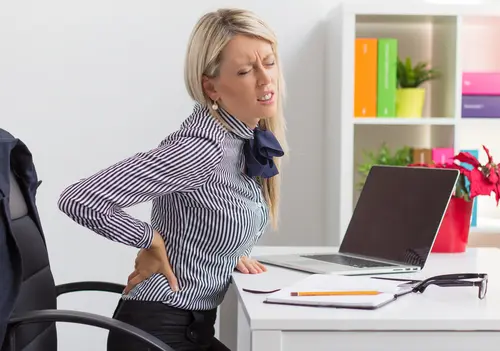
 Most people are aware that emotional stress can worsen existing back pain, but the idea that emotional factors could be the primary cause of physical pain takes this concept one step further. Stress-related back pain is a psychosomatic condition, one in which physical symptoms arise as a direct result of psychological factors. This shows how connected our emotional state is with our physical well-being.
If you suffer from stress-related back pain, your symptoms are not imaginary. They are very real physical problems that you need to solve so they don’t get in the way of your daily activities. Here’s a deeper look at stress-related back pain from Spine-health, how it’s diagnosed and how to decrease your symptoms.
Causes of Stress-Related Back Pain
Before you can solve back pain caused by stress, you need to understand why it occurs. Stress can be divided into four different categories:
- Emotional (depression, anger, anxiety)
- Cognitive (pessimism, hopelessness, negative thoughts)
- Environmental (financial problems, job loss)
- Physical (chronic illness, weak back muscles)
You may be more susceptible to stress-related back pain if you have a Type A personality, which is characterized by these traits:
- Strong internal drive to succeed
- Great sense of responsibility
- Self-discipline and motivation
- Perfectionistic and compulsive tendencies
Stress-Related Back Pain: A Vicious Cycle
It all starts with a little stress and escalates from there:
- You feel stressed about something in your life.
- Your muscles start to tighten, which may cause lower back pain.
- The pain begins to restrict your ability to perform certain functions, including leisure activities.
- Limited physical ability makes you stressed about the things you need to get done but physically can’t. It also leads to the weakening of your back muscles as you take it easy in an attempt to heal.
- Increased stress about your back pain and continually weakening back muscles cause more pain.
- The cycle continues on and on.
From a medical standpoint, here’s what’s happening:
- Long-standing emotional tension gets pushed into your unconscious mind as you attempt to think clearly about daily tasks.
- Unconscious tension changes the body’s nervous system by constricting blood vessels and reducing blood flow to muscles, nerves and other soft tissues in your back.
- Restricted blood flow decreases oxygen delivery to the affected area and allows biochemical waste products to build up.
- These issues result in muscle tension, spasms and back pain.
Diagnosing Stress-Related Back Pain
It’s very important not to self-diagnose your back pain. It’s possible a serious medical condition such as a spinal infection or tumor is the true underlying cause. Visit Spine Correction Center of the Rockies to have your lower back pain diagnosed and any serious conditions ruled out.
If you do indeed have stress-related back pain, the history onset could seem quite random. You might be unable to identify a specific incident that occurred when the pain started. It’s common for back pain to begin with a pulled muscle and continue due to emotional stress long after the injury has healed. In many cases, the pain seems to move around when stress is the primary cause.
Treating Stress-Related Back Pain
Since your back pain could be caused by a variety of stressful factors, try these tips from WebMD to stay emotionally in control:
- Learn time management skills: Focus on one task at a time and complete them in order of importance. If you can’t get everything done, delegate tasks to others. Take breaks throughout the day and do something you really enjoy.
- Make good lifestyle choices: Go to bed and get up at the same time every day. Learn how much sleep you need and make sure you get it. Eat a healthy diet full of fresh fruits and vegetables, whole grains, lean meats, and low-fat dairy. Avoid too much caffeine. Participate in physical activities every day, such as going on walks, gardening, bike riding or playing with your kids.
- Confide in others: If you have a lot of stress in your life, tell your family members, friends, boss and members of your church. Join a support group or take a stress management course. These resources are in place to help you.
- Seek treatment for your back pain: At Spine Correction Center of the Rockies, we work to resolve your lower back pain, not by covering up your symptoms, but by getting at the root cause.
Contact us online or call (970) 658-5115 to set up a free consultation. We can work with you to help reverse the cycle of stress and back pain.
