
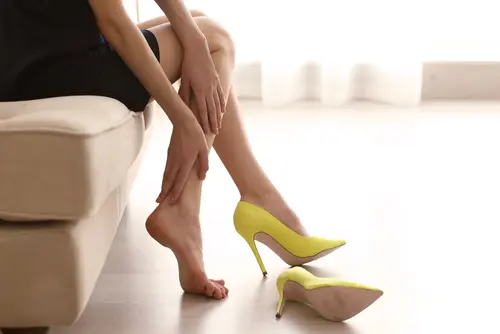
 When it comes to wearing high heels, many women believe the notion of “no pain, no gain.” This fashion trend may make your legs look long and lean, but the pain and adverse health effects just aren’t worth it. Here are 10 good reasons to ditch high heels for good.
Knee Damage
Walking in high heels alters your posture. One common result is excess strain on the inside of your knee joint. If you keep it up, this added pressure could develop into osteoarthritis.
Tightened Calf Muscles
Many young women in their 20s who wear high heels develop an abnormal gait from these unnatural shoes. One reason is that the angled position of the foot causes the calf muscles to shorten and tighten. This puts greater stress on your leg with every stride. Over time, this added strain can lead to a higher amount of muscle fatigue among heel-wearers.
Tight Achilles Tendons
When the toes point downward, the Achilles tendon on the back of your heel tightens up. This makes you more susceptible to a torn or ruptured tendon, which can be extremely painful.
Bony Heel Enlargements
Many high heels have rigid backs or straps to keep the shoe firmly on your foot. Unfortunately, this can irritate the soft tissues on the back of your heel and create a bony enlargement known as Haglund’s deformity. When this lump rubs against the back of rigid shoes, it becomes irritated and can lead to bursitis. This development makes the bump even larger and increases your pain. To end this vicious cycle, you must ditch high heels!
Ankle Injuries
Balancing your whole body on the balls of your feet and a stiletto heel greatly increases the chance of spraining or breaking your ankle. Even if you have exceptional balance and never fall, high heels can still cause ankle pain because they displace the bones in this part of your foot.
Metatarsalgia
High heels redistribute much of your weight onto the balls of your feet. The added pressure here can displace your third and fourth foot bones, causing metatarsalgia. The resulting nerve inflammation can cause sharp, burning pain and create the sensation that you have a pebble in your shoe.
Morton’s Neuroma
A similar condition is called Morton’s neuroma, which also affects nerves in the balls of your feet. This is caused when high heels with pointed toeboxes squish your toes together. The nerve tissue thickens as a result, causing foot pain and toe numbness.
Bunions
High heels typically have a tight fit, which can cause a painful bony growth called a bunion to form at the base of your big toe. As a result, the toe angles inward toward the rest of your toes, which can damage internal structures in your foot.
Hammertoes
High heels with narrow toeboxes jam your toes into a bent position. Eventually, the muscles in your toes become unable to straighten, even when you’re not wearing shoes, resulting in hammertoes. Corns develop on the knuckles of your big toe and calluses form on the ball of the foot, making your feet quite unsightly.
Exaggerated Posture
Wearing heels pushes your center of gravity forward, causing your posture to become exaggerated. This takes your hips and spine out of alignment, which can result in chronic back and hip pain.
Visit Spine Correction Center for Foot & Ankle Pain Treatment
If you’ve worn high heels for too many years, you may have developed some of the above symptoms. Fortunately, your diagnosis doesn’t have to be a life sentence. Come to Spine Correction Center to treat foot and ankle pain ranging from bursitis to metatarsalgia to Morton’s neuroma, whether high heels were the culprit or not.
Begin with a free foot and ankle pain consultation to pinpoint your ailment and determine the proper treatment. To get started, please contact Spine Correction Center in Fort Collins today by calling (970) 658-5115.
