
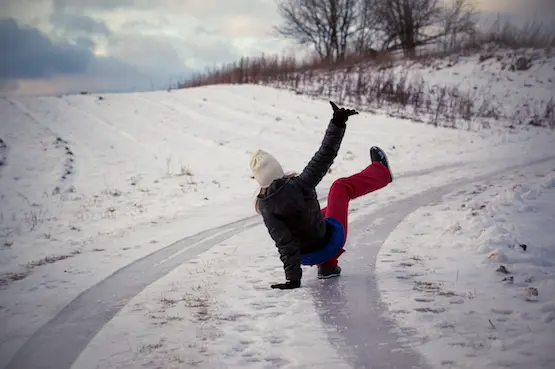
Winter injuries soar when temperatures plummet due to more hazards that can trip us up. Ice falls, winter sports injuries, auto accidents, bakc-strains and falls shoveling snow are some of the more common winter injuries. Prevent winter injuries by applying the following tips to your winter indoor/outdoor activities this year!
The Most Common Winter Injuries
When temperatures drop, the cold restricts muscle movement increasing your risk of injury AND your grip on the ground. Ever wonder what the most common winter injuries are? Check them out:
- Winter sports-related sprains, strains, tears and muscle injuries
- Slips and falls on ice
- Auto accidents and collisions
- Muscle strains
- Back injuries
Prevent injuries at home by staying on-top of ice and snow hazards you commonly encounter such as driveways, porch steps and paths. Having salt on hand and shoveling regularly can help prevent slips and falls.
Watch How You Shovel that Snow!
The #1 cause of winter injuries to the back is a result of improperly shoveling snow. While snow seems light and fluffy, when it accumulates, it becomes very heavy.
Snow shovels allow the user to pick up hefty amounts of snow to decrease the time needed for clearing, but that sizeable snow pile you are throwing over shoulder could throw your back out of whack.
Think of shoveling snow much as you would think of lifting a box–bend at the knees with your legs about a shoulder-width apart. Bend from your hips and keep your spine straight while tasking your legs with most of the lift job. Avoid twisting/turning too quickly. Serious back strains or herniated discs can occur in a blink of an eye when you aren’t careful.
Remember, colder temperatures cause your muscles to constrict; they won’t stretch as easily as they do normally. This puts you at a greater risk for injury. To prevent this, begin shoveling for a minute or two (or exercising for a minute or two) to allow your muscles to activate/warm-up. After, light stretching can help loosen up the activated muscles to help you avoid strains and tears with the exercise.
Exercise Smart
Winter is a long season to remain indoors for all exercising. Outside exercise can be good for mind, body and soul but does require a little more preparation to keep you safe.
When exercising outside, choose shoes that grip well, and make your speed appropriate for the surface you are on. Allow for a proper warm-up time. When able, warmup indoors to get muscles warm BEFORE heading outside to help reduce the risk for injury. Proper sportswear/ eyewear can keep you active but on your feet!
Skiing and snowboarding are a common winter pasttime but are also the cause of thousands of injuries each year. The American Academy of Orthopaedic Surgeons reported 88,000 winter injuries happened with skiing in 2015. That’s along with 61,000 from snowboarding, 50,000 during ice skating and 47,000 from sledding or snow tubing.
Enjoy your winter activities but be smart.
Consider Your Outdoor Gear – Especially Shoes
Falling on frozen ice, hard, cold pavement and other winter-clad surfaces can be disastrous. While it may not be fashionable, wearing a pair of snow boots until you get to the office is preferable to dress shoes–even if you aren’t walking very far! While a mere slips or fall may seem worth the risk, think again–it’s the impact that will hurt you. Patients that go into urgent care or emergency centers for winter injuries are recorded to have injuries from impact such as:
- Back injuries such as slipped discs, compression fractures or herniated discs
- Bruises and muscle tenderness
- Broken bones, especially to hips and wrists (from trying to catch yourself)
- Spinal cord injuries from hard spine hits or winter sports
- Concussions or head injuries, especially with extreme winter sports
The time it takes to thwart injury could save you months of dealing with injury pains and costs.
Check the weather forecasts before travel and ensure your car is equipped with snow tires for icy and snowy conditions.
If An Injury Occurs–We’ve Got Your Back, Literally
Regardless of all our preparation and cautionary steps to avoid injury, sometimes they happen anyway. At times, injuries creep up on us; something just feels a little off after a day shoveling snow or skiing. With overexertion and shoveling snow, it’s easy to put the back out of alignment, causing intense pressure in the joints and muscles of your back. If you have back pain, see what our spinal decompression and chiropractic adjustments can do for you. The symptoms of back injury or the neuropathy often surface later in the day or the following day.
Don’t delay. Get evaluated early.
Every winter we see a myriad of different injuries. We can help treat your back pain or injuries from slips, falls, overexertion, training in the cold and more. Our center is designed around natural therapies to rebuild your injuries muscles and tissues in the right way to get you back to your life quicker.
Do you have swelling in an area of your body? Ask about anti-inflammatory injections. For larger injuries we have spinal rehabilitation therapies and neuromuscular reeducation treatments. If you have become injured or feel that something is off after possible winter injuries, call Spine Correction Center of the Rockies today at (970) 658-5115 for your health evaluation!
