
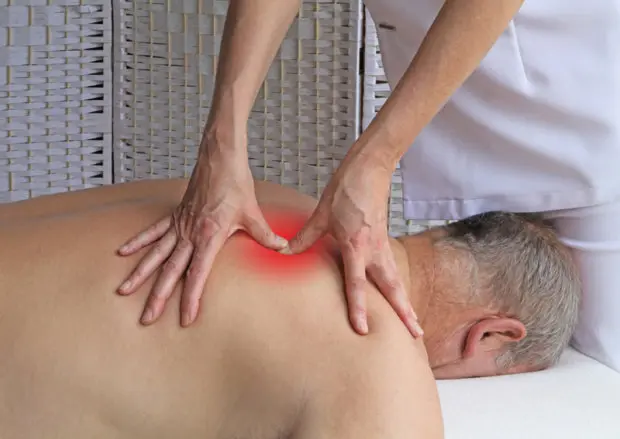
Trigger points are becoming more common as people become more active. These are tight bands of muscles that you can feel as a knot in your back, neck and elsewhere in the body. Instead of simply being a knot, however, trigger points can cause muscle weakness, decreased blood flow and other negative health effects. Find out if trigger points are affecting you and the treatments and habits you can utilize to remedy them!
What Are Trigger Points?
There are many studies that have been done to figure out how many muscles you have in your body and how they function. There are at least 650 different muscles and groups of muscles in your body. Depending on how far down on the muscle levels you want to go, you can have as many as 840 individual muscles, all allowing you the ability to move. When you want to move a part of your body—even simply opening and closing your eyes—that involves your nervous system sending signals from your brain to your muscles. Those muscles are attached to your bones and joints and whole muscle groups pull in the direction you want to move.
The muscles are amazing and are found throughout your entire body, but they can experience problems sometimes. Have you ever found yourself with a knot of tension in your back that’s tender to touch or rub it? The problem is likely trigger points. These are tight bands of muscle where the muscle fibers have bunched up under stress, exertion or pressure. There are about 620 different points in the human body that can be trigger points under the right conditions.
When movements, exercise, sports training, overexertion or even stress become too much, muscles can bunch up suddenly, creating knot-like lumps. Many patients can even feel these lumps, which are tender and can become swollen. These are trigger points, and even if you don’t remember what caused them, the muscles did have a certain point at which they were triggered to bunch up.
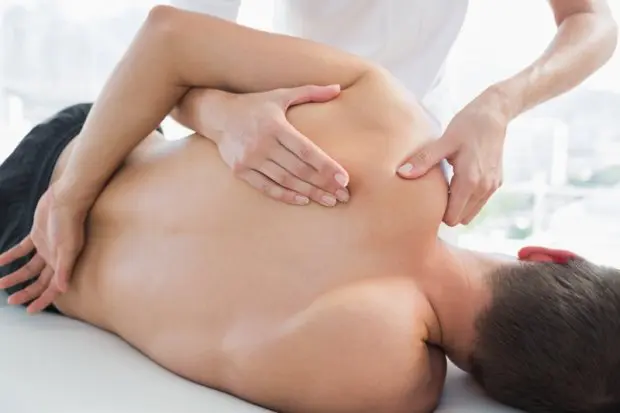
Can Stress Cause Knots?
There are many factors that play a part in the formation of trigger points. One of those factors is stress, as stress leads to increased pressure in various parts of the body. Studies show that most (if not all) people are in a state of stress at some point during the day. This is when demanding circumstances or outside forces cause physical, mental and emotional strain and tension to happen in the body. This can create physical responses in the body as the mind and emotions try to cope with the factors that is causing tension. That physical response can be one trigger point or many of them.
How Trigger Points Affect Your Health
You may think that a knot of tension is no big deal. However, depending on the types of knots you get and how often they happen, they can actually cause you health problems. Some of the most notable of those problems are aches and pains, but some patients experience a limited range-of-motion, stiffness and even muscle atrophy if trigger points are around for too long.
This is because trigger points restrict movement and cause muscle weakness to happen. That weakness happens when there is less blood flow to muscles that need nutrients carried by the blood. When there are bunches or knots in your muscles, there is restricted blood flow and deterioration and atrophy can happen. So yes, trigger points can actually be quite a big deal to some patients. They can cause symptoms such as:
- Muscle overload or overexertion
- Loss of feeling to the area where the knot is or to areas connected to those nerves (which is neuropathy)
- Tingling in the muscle area
- Muscle weakness or spasms
- Chronic pain or aching
- Tenderness and possible warmth to the touch
- Inflammation and swelling
- An inability to move or pain when moving
- Muscle atrophy over time

Treatment for Your Knots
Even if you don’t remember the initial cause of your trigger point, we have found some common causes that our patients have that include:
- Chronic stress
- Overexertion or work on the muscles
- Trauma to the muscles from injury, hits/impacts and strains
- Infections
- Poor posture that displaces muscles over time
- Psychological disorders associated with stress or anxiety such as PTSD or depression
- Habits such as tobacco use (like smoking) or poor posture
You always want to have your knots treated, especially if you’ve had them for some time. When you have trigger points, the lack of blood flow to those muscle fibers will limit healing of both the muscle and joint it is connected to. We use trigger point injections to help calm down inflammation in the close joint while reducing pain in the trigger point itself. Trigger point injections only take a few minutes and are done to promote healing of the dysfunctional muscle.
Often, we couple an injection with massage or myofascial therapy to break up the pressure in a muscle knot so it goes away. For severe or large trigger points, electrostimulation, heat therapy and other therapies that speed up circulation and healing may be needed to rehabilitate the muscles. If you are in pain and you believe it to be caused by trigger points, make sure to schedule your consultation with Spine Correction Center at (970) 658-5115!
