

Some injuries can affect more than just the one place you were injured, such as a bone or muscle. Often with major injuries, a person must allow their body time to heal by restricting movement of the injured area. However, this can lead to muscle atrophy, which causes weakness, and loss of muscle mass and strength. This atrophy doesn’t just happen with injuries either. It can simply happen if you are inactive for too long. Use these tips to help combat your muscle atrophy when you see it happening!
What Is Muscle Atrophy?
Many people will go through periods of less activity, injuries or surgeries that will make it so they aren’t exercising as much. Wintertime is a time when there is less physical activity among people because of the elements, travel conditions and more. Injuries and surgery are major causes of inactivity, which can lead to muscle atrophy. Healing can take months, which means your muscles aren’t getting the activity they need to stay strong. When your body goes through these periods of inactivity, you will experience muscle wasting. The muscles will grow thinner and weaker.
You can get muscle atrophy simply with aging as well. If your atrophy happens as you get older, it may be what is called “sarcopenia”, or atrophy with aging. The elderly experience muscle wasting much quicker than teens or young adults would when they go through periods of inactivity. If you are getting older and want to retain your muscle integrity, it would be wise to keep up on an exercise schedule that will continually work your muscles. Even scheduling in times for walking throughout the day counts.

Rebuilding Atrophied Muscles
The best way to start rebuilding your atrophied muscles is to take baby steps. It’s not smart to jump right into intense training or exercise routines. Especially if you are overcoming an injury or have recently had surgery, you want to take it easy. You can:
- Start off with isometric exercises. These are exercises you can do without any training equipment, but ones that focus on muscle contraction and relaxation. An example would be focusing on your stomach muscles, contracting them for 10 seconds and relaxing them for 10 seconds.
- Mid-range exercises. These are ones between light isometric exercises and weight-bearing exercises. For example, you can hold a squat against a wall for a specific amount of time or you could hold a plank. The focus is on one muscle group that you contract and relax over and over. Even sitting down and contracting your quad muscle for 10 seconds off and 10 seconds on is an example.
- Start weight-bearing exercises. With these, always start off with lighter weight and fewer reps and build up to more over time. You want to be careful not to do too much too soon or you could re-injure your muscles. You should be able to do 8-12 reps with the amount of weight you have chosen. Your reps should push you somewhat, but should not be overly difficult for you. If they are, go down on reps or weights.
- When muscles start to become stronger and you are having an easier time with your current exercises or weight lifting, move on to a few extra pounds and/or more reps.
- Focus on your diet. Muscles and other soft-tissues can’t get what they need if you’re not providing your body nutrient-rich fuel. That means cutting out the soda, treats and snack foods for vegetables, fruits, protein foods and grains. A better diet means a stronger body.
- Drink your water. Your body needs at least half your weight in ounces of water each day. When you get the hydration you need, muscles can build up better.
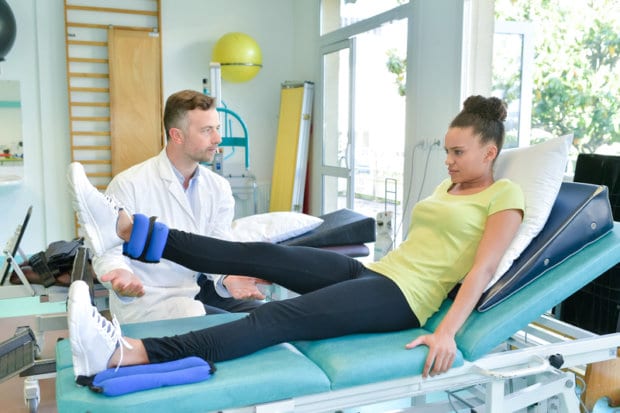
- Invest in chiropractic and physical therapy for customized treatments and exercises that will help rebuild your muscles much faster.
How Can Neuromuscular Reeducation Help?
Neuromuscular reeducation is a way to “retrain your brain” to use correct posture and biomechanics. You may be sitting, standing, walking or even running in a way that puts uneven stress and pressure on specific muscles and joints. Over time, incorrect posture and technique can result in pain as well as soft-tissue damage. Neuromuscular reeducation has several benefits to your body, and is sometimes referred to as “vibration therapy”.
This therapy is a way for patients to combat muscle atrophy or to keep their muscle integrity through the off-season. Both injured patients and non-injured athletes use vibration therapy to improve their balance and performance. This therapy consists of a standing platform that sends vibrations throughout a patient’s body. We use body weights and that gentle vibration to work with your brain’s natural reflex to stand upright. In this way, your brain develops a better—or healthier—way to control your postural muscles.
As it helps straighten you out naturally, the machine sends countless vibrations through your body. This causes your muscles to contract and relax dozens of times per second, working your muscles just like exercise would do. This boosts your circulation, muscle building and provides nutrients to your soft tissues that you need to keep them healthy and strong. Patients generally experience improved balance, greater flexibility, a wider range-of-motion, less body tension and less inflammation in the soft tissues. Some patients even have improved mineral density in their bones with this therapy. If you have muscle atrophy, it’s definitely a therapy to try.
Combat Your Muscle Atrophy Today
Many of our tips and therapies can help rebuild your muscles after muscle atrophy. With any injury, it’s always important to make sure the body follows a natural alignment and that it has even pressure throughout all the soft tissues and joints. Chiropractic adjustments, vibration therapy and others can all help do this as you combat your muscle atrophy. With our therapies and your at-home efforts, you can start to see more muscle integrity and strength. To see how we would treat your case, call Spine Correction Center of the Rockies today at (970) 658-5115 today for your free consultation!
